The Audio Problem: Why Every Great TV Needs a Soundbar
Your TV is a marvel of engineering with one unforgivable flaw: it sounds like a phone playing from inside a shoebox.
This isn't an exaggeration for effect. Modern flat panels are a few centimeters thick, and physics doesn't negotiate. A speaker needs room to move air, and there is no room. So manufacturers tuck small drivers into the rear or bottom edge, firing down at your cabinet or into your wall, and then spend the rest of the budget on picture processing because that's what sells in the showroom. A $2,000 OLED can look stunning and still make dialogue in a Christopher Nolan film unintelligible. You already bought the screen. The single biggest upgrade left is sound.
The good news: you don't need to become an audiophile or rewire your house. There are three honest paths, and only one of them is right for most people.
Path one: the soundbar (do this)
A soundbar is one bar, one cable, done. Plug it into the TV's eARC port, run a room calibration if it offers one, and you've just made the jump from "where did that line go" to hearing every word. For the vast majority of living rooms, a soundbar is the correct answer — simple to set up, no speaker wire to route, remote works through the TV.
The market splits cleanly into tiers, and each tier has a clear value leader.
Budget: Sonos Ray ($199) or Samsung HW-Q800D (~$577–$685). The Ray is the honest budget pick: stereo 2.0, optical-only, no Atmos, no voice mics — and at the permanent $199 price (Sonos cut it from $279 as a "win back your love" move after its 2024 app debacle), it's the cheapest way to escape TV speakers entirely. Buy it for bedrooms and second TVs. Step up to the Samsung Q800D if your main room deserves Atmos: 5.1.2 channels, a real wireless subwoofer in the box, DTS:X support, and TechRadar's top recommendation — just buy it at the $577–$685 street price, never at MSRP, and know the 5.1.2 surround is virtualized at the back unless you add the separate rear kit.
Mid-range: Sonos Beam Gen 2 ($499), Samsung HW-Q930D (under $800 on sale), JBL Bar 800MK2-class (~£600). The Beam Gen 2 is the dialogue-clarity champion — five years of owner goodwill, and community threads are full of people saying it's "far clearer than anything I've had before." Its Atmos is virtualized (no physical up-firing drivers) and bass needs the Sub Mini for movies, but at $499 — or sub-$400 on its regular dips — it's the proven compact pick. The Q930D is the Samsung step-up: true 9.1.4 with wireless rears and sub included, same trick as the flagship with a smaller sub and a much smaller price. Samsung's rule is absolute: never pay MSRP; the $698 Woot deal is the reference price the community remembers. The JBL Bar 800MK2 is the wild card — detachable battery-powered surrounds that dock onto the bar to charge, a 10-inch sub, and the family's bass reputation, minus dedicated height drivers. New (April 2026) with thinner validation than its bigger brother (UNVERIFIED: owner evidence still thin), so buy on emerging discounts, not launch pricing.
Flagship: Sonos Arc Ultra ($899 on sale), Samsung HW-Q990H (~$1,698), Sony Bravia Theatre Bar 9 (with a caveat). The Arc Ultra is the enthusiast favorite: 9.1.4 from a single bar, class-leading dialogue with adjustable AI Speech Enhancement (finally fixing the original Arc's weakness), and the multi-room Sonos ecosystem. The catches are real: one HDMI eARC port and no passthrough (consoles plug into the TV, not the bar), no DTS:X, and a full system with Sub 4 and Era 300 surrounds runs past $2,700. The 2024 app fiasco also left a trust scar — sentiment is recovering under the 2026 software rebuild, but you're buying into software risk, not just hardware. The Q990H is the reference flagship by community acclamation: true 11.1.4 with real wireless rears and sub, dual HDMI 2.1 inputs, DTS:X — the whole home theater in a box. But here's the open secret: reviewers and owners agree it's essentially a software refresh of the Q990F (Sound Elevation, Auto Volume, Roon — hardware unchanged), so if the older F is still around at roughly half the price, that's the value king. Either way, never pay the $1,999.99 MSRP; Samsung flagship prices crater within months.
The Sony Bravia Theatre Bar 9 needs an honesty flag (UNVERIFIED by broad owner evidence). Reviewers give it five stars — superb dialogue, gamer-grade HDMI 2.1 passthrough with 4K/120Hz — but community validation is thin compared to the Samsung and Sonos lines, and Sony owners who compared it against Sony's own Theatre Quad (four real speakers) kept recommending the Quad instead. The bar alone is $1,399.99 with no sub and no rears; a full system with sub and surrounds lands around $2,400, which is Quad territory. Buy it on sale, ideally with a Bravia TV, or buy the Quad.
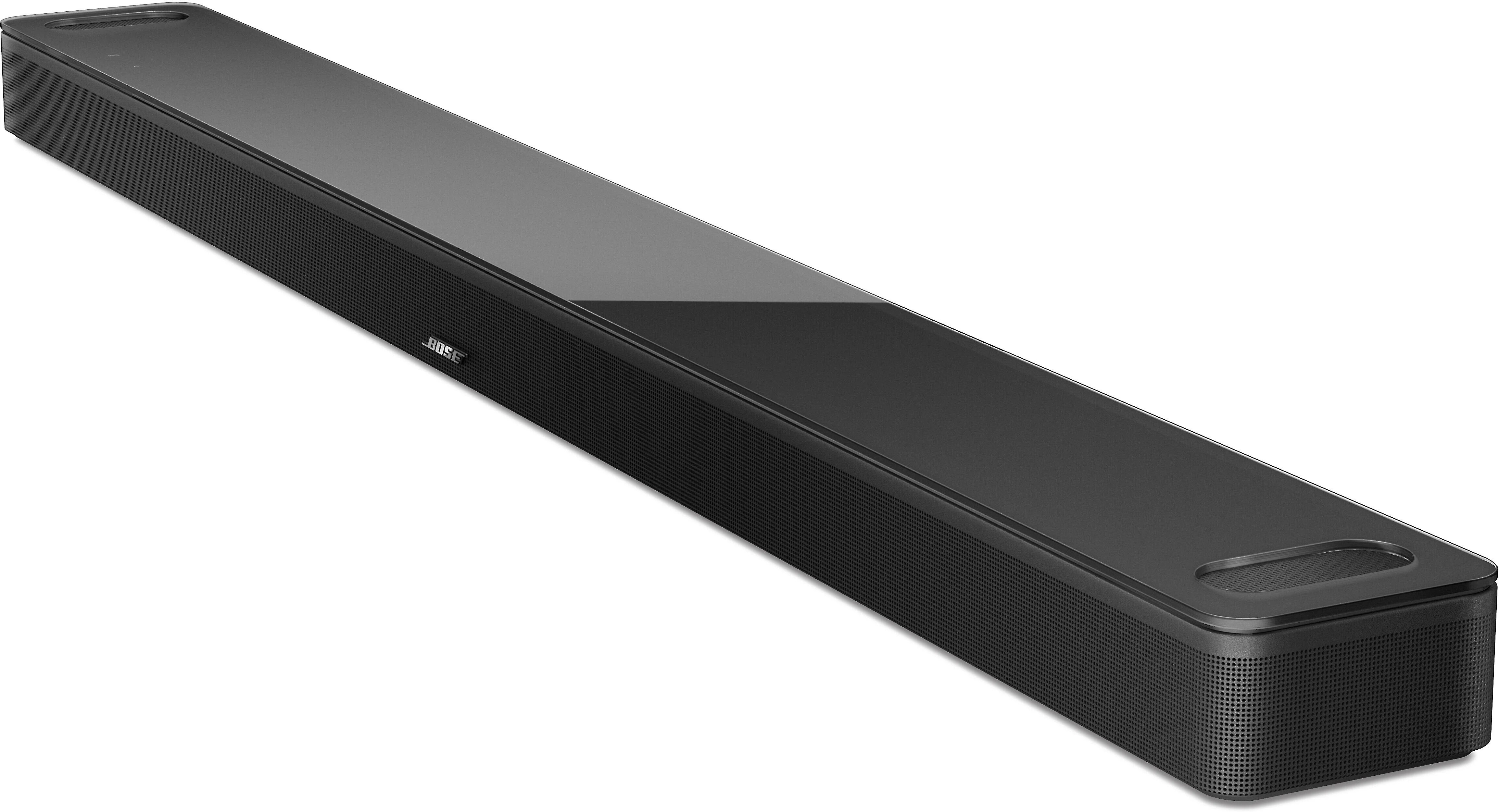
A note on Bose: the Smart Ultra at $679 (down from $999, lowest in a year) is the music-first pick — owners consistently say nothing in the class stages music better, and AI Dialogue Mode genuinely works. But the full ecosystem runs $2,400–$3,000, owners report random wireless disconnections, and the "wireless" surrounds need mains power anyway. The cheaper Soundbar 600 ($449) has real up-firing Atmos drivers and strong reviewer consensus, though community owner voices are thinner there (UNVERIFIED by owner evidence) — treat it as reviewer-validated rather than community-driven, and note the Smart Ultra on sale compresses its value hard.
Path two: AVR + speakers (the best sound, the most hassle)
This is what home theater people actually run: a receiver as the hub, real bookshelf speakers up front, and a proper subwoofer. It sounds better than any soundbar at the same price, and it costs you a weekend of cable routing and a receiver the size of a microwave.
The entry receiver question is Denon AVR-X1800H (~$700–850 street, inflated lately vs the $649 MSRP) versus Yamaha RX-V6A (fire-sale at $430–$550). The Denon is the community's default first AVR — Audyssey MultEQ XT room correction, 3-year warranty, uneventful ownership across thousands of setups. The Yamaha is the value play: $200+ cheaper, seven HDMI inputs, and the better multiroom-music story via MusicCast. The Yamaha caveats are specific and worth knowing: it's 2020 hardware at end of life, YPAO trails Audyssey in community regard, Yamaha killed the Alexa MusicCast skill in June 2026 (real owner anger), and there's a famous deal trap — a viral "$429.95 RX-V6A deal" post turned out to be the cheaper RX-V4A. Read the model number on the box before you pay.
One step up, the Denon AVR-X3900H ($1,849, launched May 2026) is the new mid-range sweet spot on paper — 9 amplified channels, XT32 standard, four independent sub outputs, Dirac upgradeable — but owner evidence is still in the launch-buzz phase; nobody has lived with one long enough to find the bugs. The practical move: clearance X3800H stock has been seen around $1,000, roughly $850 under the new model, for the same XT32 and nearly the same platform. Marantz Cinema 50 (~$2,000 on sale) is the emotional pick — gorgeous, warm-sounding, 49-page owner thread of happy buyers — while the measurement crowd insists a Denon X3900H does ~95% of it for $650 less and the HDAM "house sound" is marketing. Both things can be true; buy the Marantz if the system is also furniture.
For speakers, the research keeps circling the same under-$600 shortlist: ELAC Debut 2.0 B6.2 (warm, forgiving, front-ported — the "just buy it" default at $329–$400), Wharfedale Diamond 12.2 (the smooth diplomat, ~$500–$600, though US availability looks patchy), and Klipsch RP-600M II ($450 street — the efficiency play for rock and home theater punch, with horn treble that divides rooms). Pair any of them with the SVS SB-1000 Pro ($599.99) — the compact sealed sub the community trusts because of SVS's 5-year warranty, 45-day trial, and a real human answering forum posts. And since the brief demands honesty: if you wander into the Wharfedale Linton 85th Anniversary territory, know that independent measurement found 85.1 dB sensitivity against a claimed 90 dB, and the ~$300 dedicated stands aren't really optional.
Budget the AVR path honestly: an X1800H at a sane price ($700) + ELAC B6.2s ($350) + SVS SB-1000 Pro ($600) is about $1,650 before cables and stands. It will embarrass any single-bar soundbar for movies — but you're the one calibrating Audyssey and running the wire.
Path three: powered speakers (the middle ground)
Somewhere between the soundbar and the receiver sits the powered-speaker option: a pair of active speakers with a sub output, no receiver at all. The research dossiers didn't cover specific powered models, so I'll keep this honest and general — but the concept is sound. You get real stereo separation and better drivers than any soundbar offers at the price, with setup barely harder than a soundbar. What you lose: Atmos, surround expansion, and the receiver's room correction. It's the pick for music-first TV rooms where dialogue clarity and stereo imaging matter more than surround effects.
ARC/eARC setup basics: where everyone trips
Almost every "my soundbar doesn't sound right" complaint traces to setup, not hardware. Here's the short version.
What eARC actually buys you: the audio return channel sends TV audio back to the bar over HDMI. eARC (the "e" matters) has the bandwidth for uncompressed Dolby TrueHD and full Dolby Atmos; plain ARC doesn't — with ARC you get compressed Dolby Digital Plus at best, and optical is worse (stereo or basic Dolby Digital, no Atmos, no CEC volume control). If your bar supports Atmos and your TV has an eARC port, use it. One specific HDMI port on the TV is labeled eARC (sometimes ARC) — the bar goes there and nowhere else.
The CEC handshake headache: CEC lets your TV remote control the bar's volume and auto-switch inputs, and it works until it doesn't. Owners across every brand report flakiness — bar not waking, volume stuck, inputs fighting. The community advice is consistent: turn on HDMI-CEC (Samsung calls it Anynet+, Sony calls it Bravia Sync), try it, and if it's misbehaving, a cheap universal approach (disable CEC, use the bar's own remote or app) beats fighting it. When buying, note the philosophy split: Sonos gives you a single eARC port and expects everything to hang off the TV, while Samsung and JBL give you multiple HDMI inputs so you can route through the bar instead — fewer CEC arguments that way.
The three common mistakes:
1. Wrong HDMI port. The bar plugged into any port that isn't the labeled ARC/eARC one gets you picture, no sound, and an hour of confusion. Check the TV's port labels. 2. Old cable. eARC needs a High Speed HDMI cable with Ethernet at minimum; for 4K/120 gaming chains you want Ultra High Speed (48Gbps). That cable from 2014 in your drawer is a suspect, not a cable. 3. TV speakers still on. After connecting, the TV's internal speakers must be set to off (or "external speakers" selected in the TV's audio output menu). Skipping this gives you the bizarre double-audio echo that people mistake for a broken bar.
Run the room calibration after final placement — Trueplay on Sonos (needs iOS for full tuning), SpaceFit Sound Pro on Samsung, the JBL ONE app, ADAPTiQ's included headset on Bose. Manufacturers include calibration because rooms change everything; skipping it leaves 10–20% of the performance on the table.
The honest ending
Nobody hears your TV's speakers and thinks "this is fine" — they just don't know how cheap the fix is. A $199 Sonos Ray is a bigger upgrade to your nightly experience than a $200 jump in TV tier. Start with the budget you have, buy on sale (nothing in this category is worth MSRP), wire it through the right port with a real cable, and turn the TV speakers off. Your panel finally gets the soundtrack it deserves — and the next time dialogue disappears into an explosion, it'll be the movie's fault, not your hardware's.