QD-OLED vs WOLED vs MLA-OLED: The Panel Wars Explained
Prices and claims observed September 20, 2026. Re-verify live before buying.
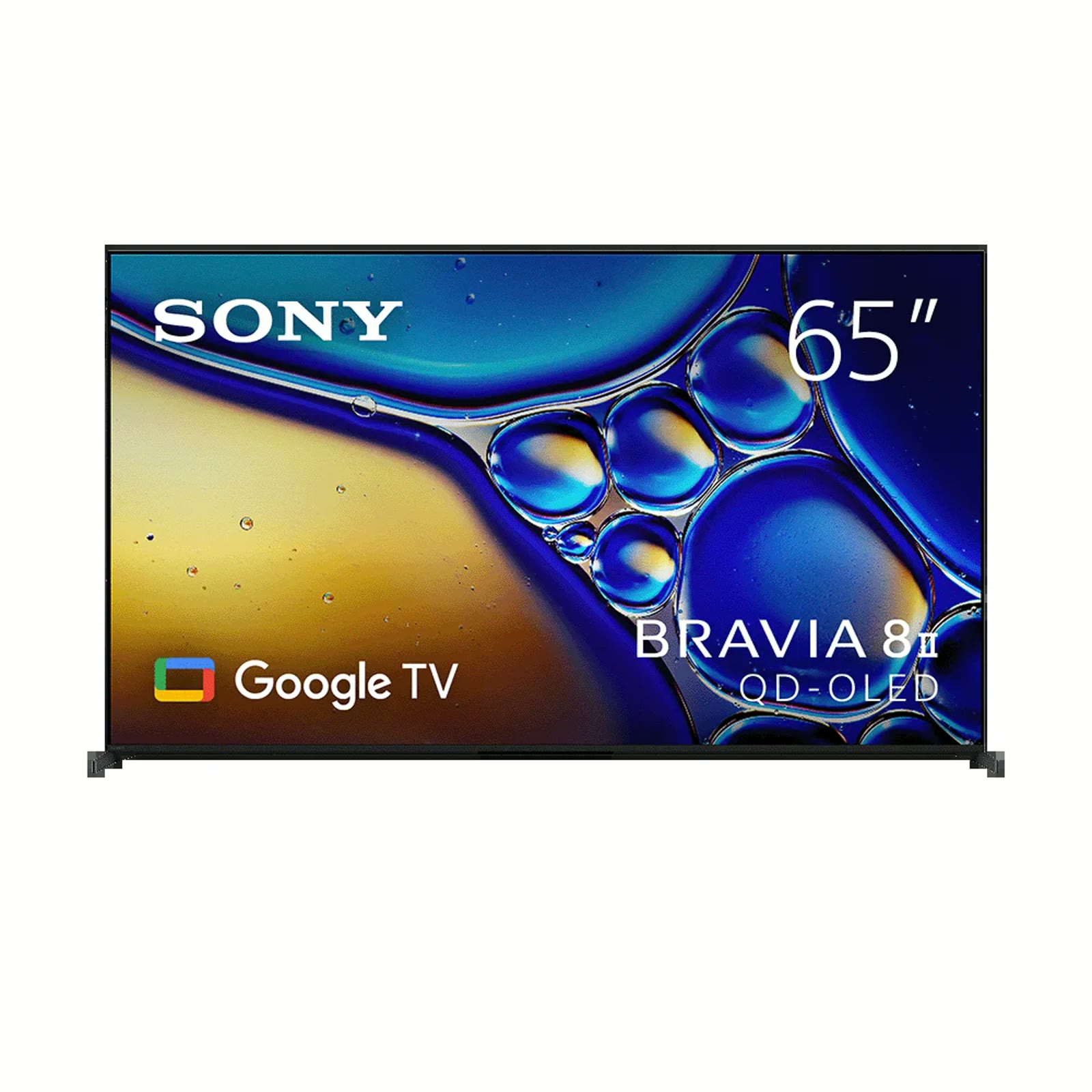
On July 18, 2026, in Scarsdale, New York, a panel of judges stared at three flagship TVs next to a $40,000 Sony mastering monitor and settled the year's biggest argument. The Samsung S95H — a QD-OLED — scored 9.3 and ended Sony's seven-year OLED winning streak at the Value Electronics TV Shootout. The Sony Bravia 8 II, also QD-OLED, took second at 8.0. The LG G6, the best of WOLED, finished third at 7.4.
One shootout doesn't settle a technology war. But it tells you where things stand in 2026: QD-OLED is the critics' champion, tandem WOLED is the all-rounder fighting back on brightness and warranty, and MLA — the tech that won these shootouts two years ago — has already been lapped by its successor. Here's what's actually different between the three panel types, where each wins, and which flagships use which.
What the three panels are
QD-OLED is Samsung Display's architecture: a layer of blue OLED emitters with quantum dots converting portions of that blue light into red and green. No white subpixel, no color filter sapping light — the color is generated, not filtered. One company makes every QD-OLED TV panel on earth (Samsung Display), and it sells them to Samsung Electronics and Sony.
WOLED with Primary RGB Tandem is LG Display's answer: a four-layer stack of red, green, and blue OLED emitters, plus a white subpixel that boosts brightness (the "W" in WOLED). The 2026 generation — "Primary RGB Tandem 2.0" in the LG G6, "Primary RGB Tandem" in the Panasonic Z95B and Philips OLED+910/950 — stacks the emitters for more light output than the older three-layer designs. LG Display sells these panels to LG Electronics, Panasonic, and Philips.
MLA-OLED — Micro Lens Array — was the 2023–2024 brightness trick: billions of tiny lenses focusing each pixel's light outward instead of letting it scatter inside the panel. It powered the LG G3/G4 generation and won its share of shootouts. In 2026 it's the previous generation: the flagship conversation has moved to tandem stacks, which is why you'll find MLA discussed in clearance-deal threads (the G4/G5) rather than on this year's flagship wall. If someone sells you "MLA" as cutting-edge in late 2026, they're selling you last year's panel.
Brightness: the war's main battlefield
OLED's historical weakness was brightness — great blacks, modest highlights — and every generation since has been an assault on that weakness. Here's the 2026 scoreboard, keeping manufacturer claims and independent measurements strictly separated:
- Sony Bravia 8 II (QD-OLED): 1,633 nits on a 10% HDR window, measured by Tom's Guide. Independent bench figures around 1,590–1,884 nits on highlights (UBOS.tech). Sony's claim: its brightest OLED ever, 25% brighter than its previous flagship.
- Panasonic Z95B (tandem WOLED): 2,160 nits peak at 10%, measured by Trusted Reviews — the highest independently measured figure in our research set.
- LG G6 (tandem WOLED 2.0): LG claims ~20% brighter than the G5 (CES 2026 announcement). No independent measured peak-nit figure was pulled in our research pass — treat the claim as a claim.
- Samsung S95H (QD-OLED): Samsung's brightness claims are a mess — 35% brighter than the S95F per SamMobile, 15% per The Shortcut, "up to 70% brighter than OLED HDR+" on an Amazon.ca listing. Conflicting manufacturer numbers are a signal in themselves: wait for bench tests, not press releases.
What the numbers mean in practice: the gap that used to define this war — WOLED brighter in whites, QD-OLED better in saturated color — has narrowed to the point where processing, tone mapping, and anti-glare coatings decide more shootouts than panel physics. The Z95B's measured 2,160 nits is a tandem WOLED wearing the brightness crown, at least on the 10% window that matters for HDR highlights.
Color volume: QD-OLED's home turf
This is where QD-OLED still has the clearest technical edge. Because its red and green are generated by quantum dots rather than filtered from white light, it holds saturated color at high brightness levels — the "color volume" that makes HDR look three-dimensional rather than just bright.
The measured evidence: the Bravia 8 II hit 90.55% of Rec. 2020 in Tom's Guide testing, edging the Samsung S95F's 90.26% — the best color-volume figure among the flagships tested. The counter-example is what happens on a WOLED panel: a measured 65" Samsung S90H sample (WOLED, not the QD-OLED Samsung implies) managed 98.6% of DCI-P3 but only 74.77% of BT.2020 (Notebookcheck/Ecoustics). That's the white-subpixel tax made visible: fine in the smaller P3 gamut most content uses today, visibly short in the wider BT.2020 container that future content will fill.
Honest caveat: nearly all shipping HDR content is graded in P3 inside a BT.2020 container. QD-OLED's Rec. 2020 advantage is real and measured, but its visible payoff grows as content gets more ambitious. It's future-proofing you can measure, not a night-and-day difference on tonight's Netflix stream.
Text clarity: the PC-monitor footnote
Both panel types use non-standard subpixel layouts — QD-OLED's triangular arrangement, WOLED's red-green-blue-white stripe — instead of the plain RGB stripe of an LCD. For movie watching from the couch, this is irrelevant. For desktop PC use at arm's length, it can produce color fringing on fine text that bothers some users and not others.
Our research pass didn't bench-test text clarity on the TV flagships (it's primarily a monitor conversation — the 32" QD-OLED gaming monitors like the Alienware AW3225QF and ASUS PG32UCDM live in that world), so mark this UNVERIFIED for the TV models specifically. The practical guidance stands regardless: if the TV doubles as a desktop monitor for heavy text work, a Mini-LED LCD remains the safer pick; if it's a TV first, stop worrying about subpixels.
Burn-in: the conversation that won't die
Let's be blunt: modern OLEDs are far more burn-in-resistant than the 2016-era panels that earned the reputation, and the owner record in our research is dominated by anxiety rather than corpses. No burn-in warranty-denial thread specific to any 2026 flagship surfaced in the social record. But the anxiety shapes real purchases: one buyer took a Sony Bravia 9 II over a "dirt cheap" LG G6 specifically because of "glare issues, and burn in problems."
The warranty scoreboard is the honest way to compare:
- LG G6: 5-year limited panel warranty — year one covers panel, parts, and labor; years two through five cover the panel itself (labor charged). This is the industry's best burn-in answer on paper, and it's a genuine differentiator.
- Samsung S95H / Sony Bravia 8 II: standard 1-year manufacturer terms. Whether burn-in is covered at all is something to ask before buying, not after noticing it.
Mitigation habits — varied content, sensible brightness, the panels' built-in pixel refresh cycles — are the community's actual advice. And the pragmatic alternative the groups keep repeating: if burn-in anxiety will ruin the TV for you psychologically, buy Mini-LED. A TV you enjoy beats a TV you babysit.
The panel lottery: read the fine print
2026's ugliest open secret is that the badge on the bezel doesn't always tell you the panel behind the glass:
- Samsung S95H: 55/65/77" are QD-OLED, but the 48" and 83" use LG Display tandem WOLED panels (SamMobile). Different panel, same model name, no disclosure on the box.
- Samsung S90H: early 65" review samples measured as WOLED panels. Panel sourcing appears size- and region-dependent, and the community treats it as unresolved — "If it is [WOLED], it's a HARD pass" at QD-OLED prices.
- LG C6: the 77" and 83" are sold as the C6H with the brighter tandem panel; the 42–65" C6 uses the standard panel. Same lineup, different display tech, one letter's difference.
The rule: if you're paying for a specific panel technology, verify your exact size and region before purchase. Reviewers test one size; you might be buying another.
Which flagships use which
QD-OLED: Samsung S95H (55/65/77"; the 48"/83" are WOLED), Sony Bravia 8 II (55"/65" only — no 77" exists), Sony A95L (2023, the clearance "old king" — reference color at open-box prices, but 2023 processing and 120Hz-only HDMI show their age).
Tandem WOLED: LG G6 (55–97"), LG C6 (42–65") / C6H (77"/83", brighter panel), Panasonic Z95B (55/65/77" — the cinephile's pick, with the 170W Technics audio system and that measured 2,160 nits), Philips OLED+910/950 (EU-only, same 4-layer panel as the 950 for £1,140 less in the 910).
MLA: last generation's flagship tech (LG G3/G4 era). Buy it on clearance if the price is right; don't pay 2026 flagship money for it.
The verdict
QD-OLED is the critics' champion for a reason — the S95H's shootout sweep and the Bravia 8 II's measured color volume are facts, not marketing. Buy QD-OLED if you want the reference dark-room picture and can live with Samsung's service reputation (or Sony's 55/65"-only sizes and premium).
Tandem WOLED is the rationalist's pick: the brightest measured highlights (Z95B), the best burn-in warranty (G6's 5-year panel term), Dolby Vision support across the board, and — in the C6 and clearance G5 — the best price-to-performance in flagship OLED.
And MLA? Pour one out. It won the wars of 2024. The war moved on.