The Best OLED TVs of 2026 — Reviewed and Ranked
In July, Samsung's S95H ended Sony's seven-year winning streak at the Value Electronics TV Shootout with a 9.3 — and in the same week, the Facebook groups were arguing about privacy settings, panel lotteries, and whether a 100-inch Hisense is just smarter money. Both conversations are right. This ranking weighs them both: the calibrators' scores and the owners' complaints. Everything below is grounded in reviewer verdicts, measured facts, and community discussion from September 2026. Where the evidence is thin, I say so.
Flagships
1. Samsung S95H — the calibrators' champion
Price (65", US): $3,399.99 MSRP; street around $2,800 reported by a deal blog — affiliate-driven, verify it yourself.
The S95H (QN65S95H in the US; the S99H in Europe — same TV, regional rename) is the set to beat in 2026. At the shootout, judged against $40,000 Sony mastering monitors, it scored 9.3, ahead of the Bravia 8 II at 8.0 and the LG G6 at 7.4. QD-OLED color in a dark room is the reference image of 2026, and it's a gamer's set with no apologies: 4K/165Hz on all four HDMI ports, VRR, ALLM, G-Sync, FreeSync Premium Pro, and the Glare Free 3.0 matte coating.
The Samsung-shaped caveats are real. Service is the big one — Samsung's brand-run post announcing the shootout win got hijacked by grievance comments, including a nine-month unresolved repair case. The 15,000-member Samsung TV Owners group skews troubleshooting-heavy ("SamDung's" is the house nickname). One-year warranty, burn-in coverage UNVERIFIED — on paper, LG's five-year panel term eats this alive. Samsung refuses Dolby Vision on every TV it makes, built-in apps have a reported microstutter issue, and per SamMobile the 48" and 83" use LG W-OLED panels instead of QD-OLED — undisclosed.
The verdict: dark-room watchers and gamers who want the best-measured picture of 2026 — unless you're eyeing the 48"/83", your library is Dolby Vision-heavy, or you've ever fought Samsung support and lost.
2. LG G6 — the safest, most complete package
Price (65", US): $3,399 launch; $3,299.99 street as of mid-September 2026 — a hundred dollars off is not a sale.
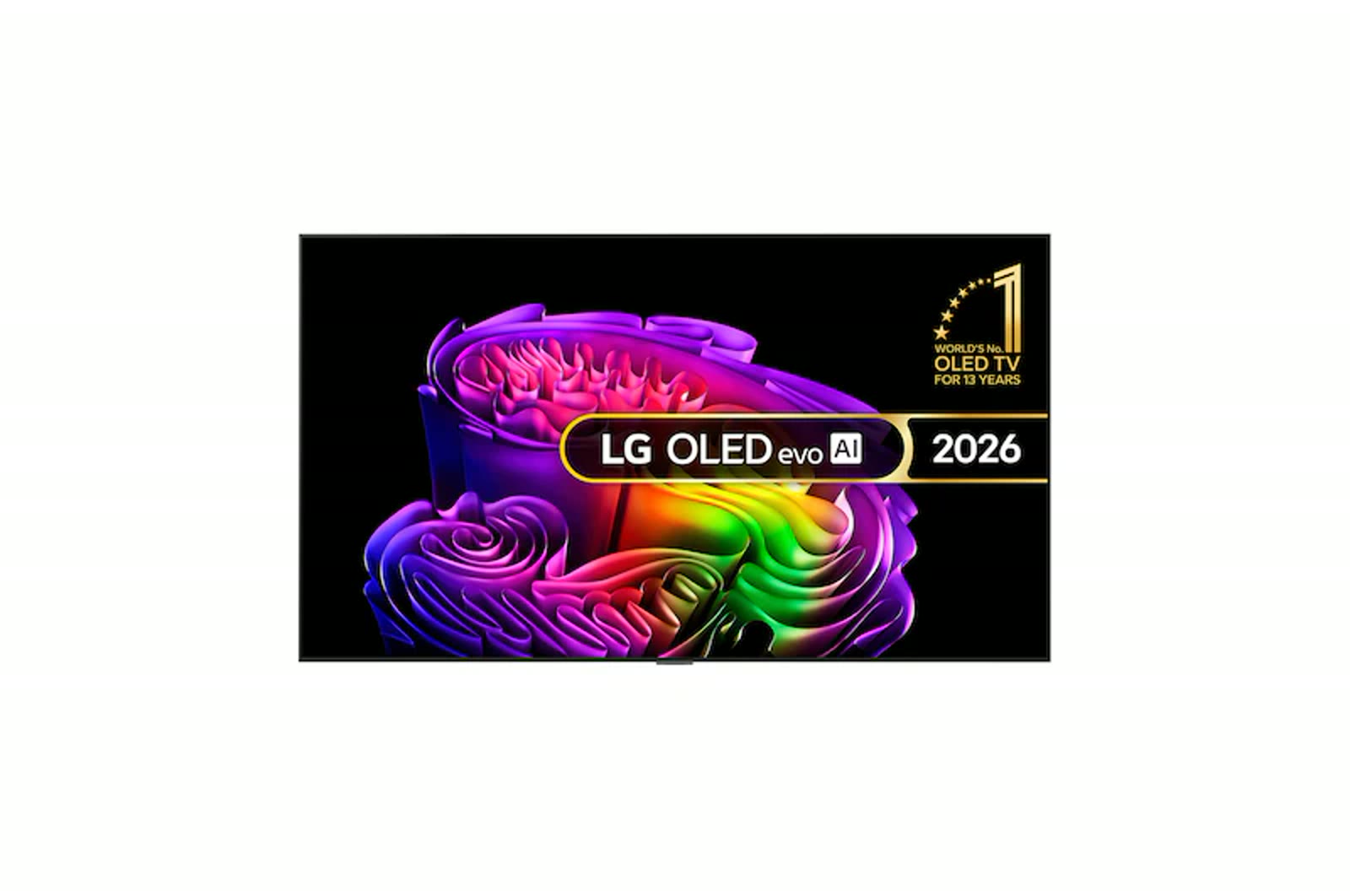
The G6 (OLED65G6WUA) is LG's 2026 flagship WOLED: a four-layer Primary RGB Tandem 2.0 panel, a claimed ~20% brightness uplift over the G5 (LG's claim — UNVERIFIED), and a new anti-glare layer claimed under 0.5% reflection. TechRadar: "a new high bar for OLED TVs in 2026." It finished third at the shootout at 7.4. What it wins on is completeness: four full HDMI 2.1 ports, 4K/165Hz, VRR, ALLM, G-Sync, FreeSync Premium Pro, HGiG, a Dolby Vision game mode — and the 5-year panel warranty (year one covers parts and labor, years 2–5 the panel), measurably better paper terms than Samsung's single year.
What genuinely annoys owners is everything around the panel. The loudest thread isn't the picture — it's the spying: "You know that tv is constantly listening to you, even when you disconnect it from the internet," plus #spyware tags on the G6's biggest Instagram reel. Second: upgrade fatigue — a genuine G4→G6 owner wrote, "I bought the g6 65 (from a g4) not a huge upgrade and you wouldnt even notice unless they were next to each other lol." Third: webOS, which the community treats as a tax on the panel — plug in an Apple TV 4K and never touch it again. Also real: no HDR10+ and no Dolby Vision 2 (confirmed omission), and weak sound despite the 40W Atmos badge.
The verdict: the most feature-complete OLED on the shelf — unless the data collection bothers you, you're upgrading from a G4/G5 expecting a revelation, or you'll pay launch price while the 2025 G5 clears "vastly cheaper."
3. Sony A95L — the old king, clearance only
Disclosure: the research covers the 2023 A95L, not a new 2026 Sony flagship — current-model validation is thin, and I could not verify current street pricing.
In the "Sony Bravia 4K / 8K TVs" Facebook group — the liveliest owner community in this batch — members were still calling the A95L the "reigning 'king of TVs'" in September 2026 and the best choice for dark-room viewing. That's the second-generation Samsung Display QD-OLED panel plus Sony's Cognitive Processor XR and XR Triluminos Max, a combination that won the US shootouts of its era. Acoustic Surface Audio+ remains genuinely excellent, and Dolby Vision is here, unlike on the Samsung side. The age shows: only two of the four HDMI ports are full-bandwidth 2.1, 120Hz-only, no 83" option, aging Google TV, and scattered "technical issues" reports — UNVERIFIED, but real community lore.
The verdict: dark-room color purists buying on clearance, well under Bravia 8 II pricing — but walk away from anything close to 2023 money ($3,499 at 65").
Mid-range and value
4. LG C6 — the TV for most folks (buy it late, not early)
Price: MSRP $1,399 (42") to $5,299 (83"); street pricing was still launch-year level at research time.
Tom's Guide called the C6 "the TV we'd recommend for most folks" — the strongest endorsement any 2026 OLED got from the press — and in the same review: "You're no worse off buying last year's C5 at a deep discount." It's the 2026 refresh of the best-selling OLED line on earth: α11 AI Processor Gen3, 4K/165Hz with full HDMI 2.1, VRR, ALLM, FreeSync Premium, G-Sync, Dolby Vision, Filmmaker Mode — the default mixed movies-and-gaming pick, with no panel fight attached.
The honest catch is a naming trap: the 77" and 83" are sold as the C6H, with the brighter Primary RGB Tandem 2.0 panel trickled down from the G-series; the 42"–65" C6 uses the standard OLED evo panel. A 65" C6 and a 77" C6H are not the same display technology. Also: webOS ads irritate owners, and the warranty is the standard one-year with burn-in replacements at LG's discretion — UNVERIFIED against LG's current policy page.
The verdict: nearly anyone who wants a great OLED without flagship anxiety — especially 77"/83" shoppers. Just wait for the holiday discount or grab a clearance C5.
5. Samsung S90H — great TV, trust problem
Price: MSRP $1,399.99 (42") to $5,299.99 (83"); street pricing UNVERIFIED.
"The S90H might be a QD-OLED. It might be a WOLED. Samsung won't tell you, and the box won't either." Review samples of the 65" were tested by Notebookcheck and Ecoustics and found to carry WOLED panels: 98.6% DCI-P3 but only 74.77% BT.2020 — measured facts, not forum rumor. The representative community reaction: "Samsung S90H is a WOLED? If it is, it's a HARD pass." Panel sourcing appears to vary by size and region, undisclosed.
What it's supposed to be: the widest OLED size run of 2026 (42"–83"), the Glare Free 3.0 matte coating — the best anti-glare treatment in the OLED class — 4K/165Hz, VRR, ALLM, and a claimed +15% brightness uplift (marketing; measured peak UNVERIFIED). No Dolby Vision, because it's Samsung. If you're buying for QD-OLED color volume, you are gambling: check the panel type in the service menu on delivery, and buy from a retailer with easy returns.
The verdict: a bright-room buyer who verifies the panel and catches a QD-OLED unit on discount gets a steal. Everyone else: the buying process is the product flaw.
6. Sony Bravia 8 (K-XR80, 2024) — the Sony that Sony owners actually buy
Price: observed 55" at $1,598 (Walmart) and £1,299 (Amazon UK); 65" at €1,620 (FB-reported Black Friday 2025) and AUD $2,500 (Australia). Launch MSRP UNVERIFIED.
Naming trap, flagged openly: "Bravia 8" now covers three different TVs — this K-XR80 (WOLED, 2024), the Bravia 8 II (K-XR80M2, QD-OLED, 2025), and the EU-only Bravia 8A (K-XR8A, 100Hz panel, 2025). Check the full model number. In the Sony Facebook group, the 8 vs 8 II debate has run since November 2025, and "the 8 is sufficient for average viewing" is a genuine community verdict.
You get Sony's XR Processor, Acoustic Surface Audio+ — the rare integrated TV audio owners call a reason to skip the soundbar — Google TV, PS5-tuned features, and an anti-reflection coating owners rate above the LG C5's. The other side: the WOLED brightness ceiling vs QD-OLED flagships is the eternal Sony-group debate, and the 8 loses it. Only two of the four HDMI ports are full-bandwidth 2.1, and there's community lore around the 77" — "online reports of software problems with the 77-inch model" — carried as reported, not verified.
The verdict: Sony loyalists who want the processing, motion handling, and speakers without the flagship tax — bought discounted, not at anything near the 8 II's premium.
7. LG B6 — the cheapest big-brand OLED, full stop
Price: 65" launched at $1,999; observed street has the 77" B6E at $1,699.99 at Best Buy and the 48" under $700 in deal posts.
What Hi-Fi?'s editor-in-chief put the B6 head-to-head with Samsung's S85H in July as one of "the first entry-level models from major brands we've tested recently." TechRadar: "almost perfect" — with the honest footnote that it's not the upgrade over the B5 anyone hoped for. You're not buying a neutered OLED: Dolby Vision, Filmmaker Mode, a full 4× HDMI 2.1 set with 120Hz gaming, FreeSync Premium, G-Sync, 0.1ms response, webOS 26 — the core LG OLED experience for the least money LG has ever asked. No panel scandal has surfaced in 2026 discussion.
The asterisks: per What Hi-Fi?'s July preview, the B6 is the first LG OLED built on LG Display's new cost-reduced OLED SE panel technology — UNVERIFIED beyond that one preview. And LG set another naming trap: in some regions the B6 ships as B65 or B6E, and the B6E drops Precision Picture Master Pro, Precision Sound Master Pro, and the marble-effect back — and it's meaningfully cheaper (65" B6E £1,999 vs B65 £2,399 in the UK at launch), so read the suffix before comparing prices. webOS ads remain an owner irritant.
The verdict: deal-hunters, second-room buyers, first-time OLED owners — anyone whose budget ends around two grand. Buy it on discount, never at launch.
8. Panasonic Z85A — the clearance-aisle cinephile's pick
Price: historical — launch $1,599 (55") / $1,799 (65"); current pricing UNVERIFIED, prior-generation stock volatile.
Panasonic sells on accuracy, not specs: standard WOLED panel, no MLA brightness tech, 120Hz, the HCX Pro AI MKII processor, Dolby Vision IQ and HDR10+ Adaptive (both formats, a rarity), Fire TV — in 55" and 65". Reviewers consistently praise the out-of-the-box color accuracy and properly done Filmmaker Mode, and the gaming set is credible (120Hz, VRR, ALLM, FreeSync Premium, G-Sync). It surfaces in deal circulation — a Slickdeals frontpage deal on the 65" back in 2024 proves the deal crowd knows this TV exists.
The compromises, stated plainly: no MLA means standard WOLED brightness — this TV struggles in sunlit rooms. Fire TV brings ads and app gaps (streaming stick recommended). Only two HDMI ports are full-bandwidth 2.1, there's a reported motion-setting bug in some firmware (UNVERIFIED), no 77" option, and a 2025 refresh kept the same Z85A model name in some regions — check the full model number. Panasonic's US footprint is thin; buy from an authorized dealer.
The verdict: the Filmmaker Mode purist who finds a real clearance price. If your room is bright, walk away.
Worth a look, but know what you're getting into. The LG W6 (77"/83", from $5,499.99) is the return of the Wallpaper TV — 9mm thin, zero cables, everything through a wireless Zero Connect Box — but community validation is thin; this is launch buzz, not a community-proven pick, and wireless gaming latency is UNVERIFIED. The Panasonic Z95B is the cinephile's OLED (tandem panel, 170W Technics-tuned audio worth skipping a soundbar for) with one brutal owner-thread counterweight: "Fire TV OS is shocking on this set." It hit $1,999.99 on Black Friday 2025 — that's the price to watch for. The Philips OLED+910 (EU/UK only) pairs a flagship tandem panel with Bowers & Wilkins sound and Ambilight at a mid-tier price, but validation on the current model is thin and there's no US availability. The Samsung S85H is Samsung's entry OLED with cautiously optimistic press — but critical consensus is still forming and its 20W audio is the weakest in Samsung's 2026 OLED line. Wait for street prices to drop.
How to choose. Start with your room, not the spec sheet — a light-controlled or dark room is where OLED earns its keep. If 60%+ of your hours are gaming, the community's standard advice is LG or Samsung over Sony: 4K/165Hz, four full HDMI 2.1 ports, and low input lag favor the G6, S95H, and C6. Sony's processing wins the movie-first vote, and only Sony and LG decode Dolby Vision natively, which matters if your streaming diet is Netflix and Apple TV+. Then count your devices: two full-bandwidth HDMI 2.1 ports (Sony's entire line) is fine for a console and a soundbar; a PS5, an Xbox, a gaming PC, and a soundbar is not fine. Pick your size from the naming traps, not the marketing: verify C6 vs C6H, B65 vs B6E, Bravia 8 vs 8 II vs 8A — and S95H vs S99H, which is the same TV with a European rename. Finally, time your purchase: nobody pays launch price. The G6 sat at $3,299.99 six months after launch — $100 off is not a sale. LG flagships fall at Black Friday, and Samsung's discounted last-year models deliver roughly 90% of the experience. Buy from a retailer with easy returns, check the panel type in the service menu on day one where the lottery applies, and re-verify every price live.
Who should NOT buy OLED. Be honest about three things. One: bright, sun-drenched rooms — a wall of south-facing windows still favors a high-end Mini-LED; the shootout numbers are measured in dark rooms, and your living room isn't a shootout. Two: heavy static content — a news ticker, a sports score bug, or an eight-hour PC desktop makes burn-in a real, documented risk, and LG's five-year panel term softens it far more than Samsung's one-year. Three: budget stretchers — if the flagship means skipping the soundbar, buying on credit, or ignoring a clearance deal on last year's model, the value play wins.
The actual move. Here's what the research really says, stripped of ceremony: the Samsung S95H is the best TV of 2026 and the worst company to need help from. The LG G6 never lies about what it is — everything uncomfortable about it is the purchase around it. The C6 is the TV the press recommends while telling you to buy last year's model. And the smartest money in the entire category is whatever flagship is sitting in the clearance aisle when you walk in.
So wait until November. Put the money you saved into a soundbar, or don't — the Sony will cover you. Check the panel in the service menu before the return window closes. And when the ads pop up on webOS or Tizen or Fire TV, remember: you bought the picture, not the operating system. Plug in the streaming box and go watch something in the dark. That's what all of this was for.